
Bad News.
Aug 18, 2026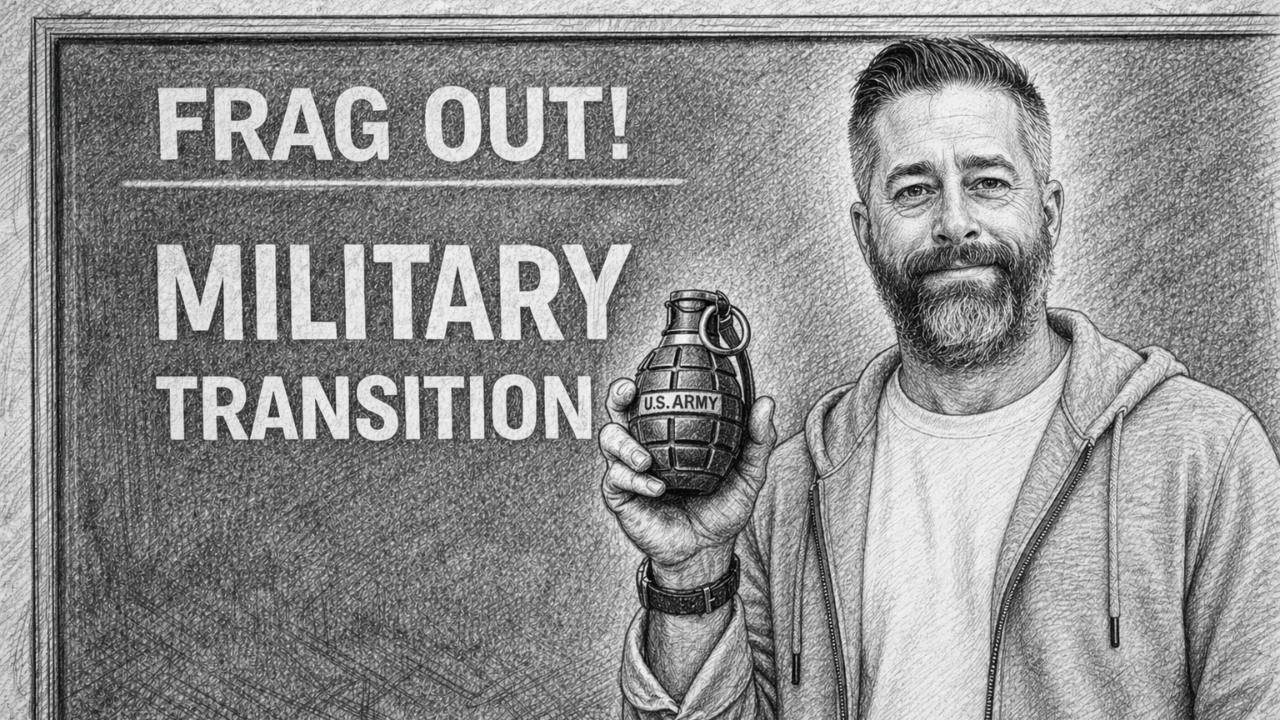
There’s a certain rumor floating around the Special Operations community that refuses to die. It lives in team rooms, circulates in smoke pits, pops up in informal transition briefings, and shows up every time someone says they’re getting out. The rumor goes like this: “If you’ve got a Special Forces tab, Ranger tab, SEAL trident, Raider badge, Recon bubble, sniper school certificate, or any other piece of military chest candy, the civilian world is waiting for you with a big paycheck, executive title, and company truck.”
Bad news: It’s not. Not only is it not waiting, it most likely hasn’t even noticed you exist. And I don’t say that to hurt your feelings, I say it because I want you to win. Veterans squander power when they build strategies on fantasies. Hope is not a course of action.
Let me make this plain: Military accolades are signals of past performance in a very specific ecosystem. They do not automatically translate to future value in a different ecosystem. If you walk into a Fortune 500 company with a Special Forces Tab and no ability to articulate business impact, they aren’t going to hand you a six-figure salary. They’re going to smile, thank you for your service, and walk you back out to the parking lot.
Unless you’re a SEAL, then they’ll hand you a book deal, movie rights, and a media agent. Relax, I’m kidding. Mostly.
But I am not kidding about the reality veterans run into the moment they leave active duty and enter the marketplace. The civilian world has its own hierarchy, its own status symbols, its own currency, its own language, and its own sacred cows. You can’t show up to a chess tournament bragging about being undefeated in beer pong and expect trophies. Wrong game. Wrong table. Wrong skill conversion.
Here’s how the civilian hiring world secretly thinks: Do I know who you are? Do I understand what you can do for me? Do I believe hiring you will reduce my risk and increase my upside?
That’s it. That’s the game. There are no bonus rounds for Valor. There are no extra points for deployments. Nobody cares how much sleep you didn’t get. Nobody cares how many times your team almost died. None of that matters to them because they’re solving a different problem than the one you spent a decade solving.
Read that sentence again with no emotion and no resentment. Just reality.
This is why so many transitioning SOF veterans walk straight into a brick wall. For years, they have been surrounded by a culture that deeply understands and honors their accomplishments. A Ranger tab means something. A Green Beret means something. A Trident means something. There is a hierarchy, and everyone knows where everyone stands.
Then you leave. And suddenly that entire context evaporates. To the civilian world, your military status markers are brand new data points in an unknown domain. You might as well be an astrophysicist trying to explain quantum field theory to a 5-year-old. The content may be brilliant, but the audience cannot decode it.
Here’s a fun exercise: Ask ten civilians what a Green Beret actually does.
3 will say: “Uh… like, Special Forces?” Which is technically correct but extremely unhelpful.
Ask those same civilians how long the Q-course is, what MOS specialties exist on an ODA, how many months a deployment cycle runs, how training pipelines work, what language requirements exist, what tradecraft is taught, what authorities you operate under, or what “implementing foreign internal defense through partner force capacity building” even means.
Watch the blank stares.
Now do the same thing for SEALs, Rangers, Raiders, Recon Marines, CCT, PJ, or any other SOF family. You will see the same result.
When a civilian sees a Trident, they see Hollywood. When a civilian sees a Ranger tab, they see Call of Duty. When a civilian sees a Green Beret, they see Rambo. When a civilian sees a Raider badge, they see… actually most of them don’t know what they’re seeing there either.
This isn’t their fault. It’s not their culture. It’s not their world. It’s not their mission.
And most importantly: It’s not their responsibility to decode you.
It is yours.
When you transition, everything flips. In the military, institutions invest in you. They send you to schools. They prepare you for positions. They tell you what the next job in the pipeline is. They hand you orders and assignments. They lay out the map for you. You never have to market yourself. You never have to explain your value. You never have to sell what you do.
In the civilian world, the polarity reverses. Now you must make the case.
More bad news: You are now applying to work for them, not the other way around. They have never thought about you. They were not expecting you. Nobody told them you were coming. Nobody on their side is sitting in a boardroom thinking, “Man, what we need around here is a former ODA 18C with combat rotations who built partner force capabilities in impoverished countries.”
That’s not on their whiteboard. What’s actually on their whiteboard looks more like: Why are our sales flat? Why is turnover high? How do we reduce customer churn? How do we build a more efficient process? How do we reduce project risk? How do we get teams aligned? What's our customer acquisition cost?
Different domain. Different threats. Different problems.
Which brings us to the most important point of this entire piece. Stop selling badges and start selling outcomes.
A tab is not a product. A trident is not a deliverable. A MOS is not a business case.
But the thinking that produces them is. This is what you must learn to articulate. This is what you must learn to convert.
The late, great Albert Einstein is often attributed with the quote: “You can’t solve problems using the same thinking you created them with.”
That is exactly what SOF veterans bring to the marketplace: Different thinking. Different frameworks. Different assessment tools. Different planning cycles. Different feedback loops. Different tolerance for chaos. Different bias for action. Different understanding of risk. Different ability to build teams across culture, language, and competing interests.
That is value (but only if you translate it).
A business leader doesn’t care that you completed Robin Sage. They care that you can build alignment across diverse stakeholders to execute complex objectives with limited resources in contested environments under competing information streams.
They don’t care that you learned how to infiltrate and exfiltrate an area. They care that you can plan and coordinate operations that integrate logistics, timing, sequencing, support, and interagency synchronization.
They don’t care that you taught partner forces how to shoot, move, and communicate. They care that you can design and deliver training that upskills a workforce, builds capability, and improves organizational performance.
They don’t care that you conducted foreign internal defense. They care that you can solve problems at scale by improving the performance of the people who actually execute the mission.
This is translation. This is how you convert military experience into business impact. This is how you make the marketplace care.
Let’s not pretend veterans invented this delusion. The myth exists because it’s comfortable. Everybody wants to believe transition is linear. Everybody wants to believe status will transfer. Everybody wants to believe the world cares.
And it doesn’t help that inside the military, everyone treats SOF like mythical unicorns. You’re told you’re elite, best-of-the-best, tip-of-the-spear, strategic asset, force multiplier, national treasure, or whatever poetic phrase some Command Sergeant Major cooked up during a change of responsibility speech.
None of that is untrue. But it is contextual. When you change contexts, you lose status. You lose identity. You lose the shorthand language of competence.
You become unknown again.
If you cannot handle that, you will fail the transition. Not because you are unqualified, but because you are unprepared for the psychological hit that comes from no longer being the smartest, strongest, or most capable person in the room.
Transition is not for the weak-minded.
Veterans often ask me, “So what job should I apply for?” First, wrong question.
The right question is: “What problem do I want to be paid to solve?”
Work is not a job. Work is problem-solving in exchange for money. Badges don’t win interviews. Clarity does. Value does. Relevance does.
You must learn how to do the following four things: Identify a problem that a company is willing to pay to fix. Articulate how your skills map to that problem. Provide evidence you can deliver consistently. Minimize risk to the hiring manager.
If you do that well, the badge becomes a differentiator. If you don’t, the badge is irrelevant.
Civilian hiring managers fear you. Yes, fear. This part people rarely talk about.
Hiring managers see Special Forces, Ranger, Marine Raider, PJ, or SEAL and they immediately wonder: Is this guy arrogant? Is he going to quit when he’s bored? Is he going to scare everyone? Is he going to treat people like trash because he expects SOF performance from accountants? Is he going to struggle with normal workplace culture? Is he going to tell war stories in meetings? Is he going to need time to “adjust”? Is he going to blow up the org chart? Is he going to be expensive? Is he secretly auditioning for a Netflix documentary?
When people don’t understand something, they protect themselves from it. That is the mechanism you are up against. Your job during transition is not just to prove competency. It’s to reduce perceived threat.
You win the moment you flip the script. The moment you stop trying to be impressive and start being useful. The moment you stop clinging to identity and start deploying capability. The moment you stop expecting recognition and start generating results.
This is how you become unstoppable in the civilian world: You show up humble. You communicate clearly. You translate aggressively. You learn relentlessly. You partner strategically. You execute consistently.
And then all those badges, tabs, and tridents suddenly become bonus points.
If you take nothing else from this: Transition is not about who you were. It’s about who you become valuable to.
Stop relying on the mythology of elite service. Stop assuming status transfers. Stop expecting the marketplace to decode you. Stop waiting for someone to notice you.
Nobody is coming. Nobody is looking for you. Nobody owes you anything.
That’s the bad news. The good news? You’ve spent your entire career thriving in environments where nobody was coming, nothing was guaranteed, and success depended entirely on your ability to improvise, adapt, and execute with limited resources under significant pressure.
Einstein’s line is the perfect mantra for SOF veterans entering business: “You can’t solve problems using the same thinking you created them with.”
That’s exactly what makes you dangerous out here. Not the tab. Not the Trident. Not the badge.
The thinking. The frameworks. The mindset. The ability to operate unconstrained.
That is the real asset. Learn to articulate it, and the marketplace won’t just thank you for your service. It will pay you for your value.
Frag out.
Stay connected with news and updates!
Join our mailing list to receive the latest news and updates from our team.
Don't worry, your information will not be shared.
We hate SPAM. We will never sell your information, for any reason.