
Stop Apologizing for Being Intense. It’s Your Advantage.
Aug 18, 2026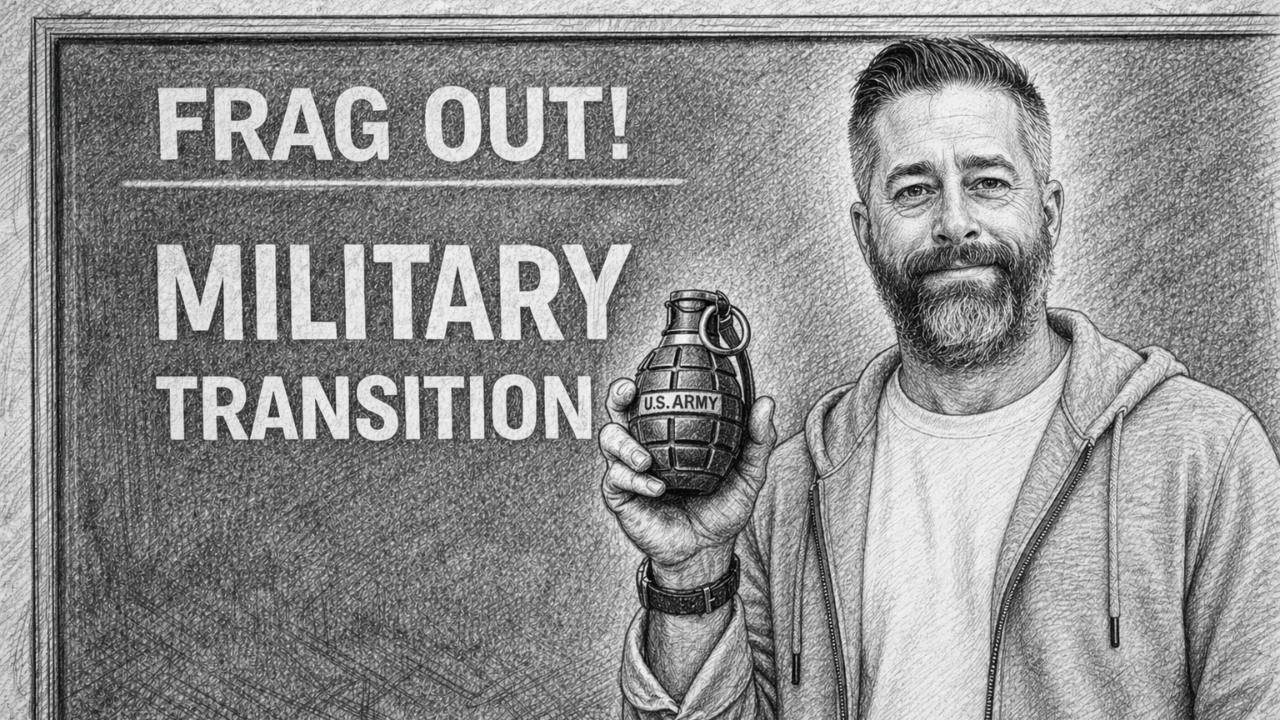
There’s a strange thing that happens when veterans step out of the uniformed world and into the civilian one. Some shrink. Some soften. Some sand off every edge until what’s left is a smooth, safe, vanilla version of who they used to be.
And nearly all of them apologize for being “too intense.”
Too direct. Too driven. Too mission-focused. Too disciplined. Too serious. Too much.
The world tells you to “tone it down.” Managers tell you to “relax.” Well-meaning coworkers say, “You don’t have to try so hard.” Interviewers say, “You come across… strong.”
As if that’s a bad thing.
Here’s the truth most transitioning vets never hear: Intensity is not your flaw. It’s your edge. It becomes a liability only when it’s untrained, unchanneled, or misunderstood. But when you harness it correctly, it becomes the most valuable asset in a disengaged workforce.
When you served, intensity wasn’t optional. It was oxygen. It was standard operating behavior. You lived in a world where: Accountability was baked into every action. Standards actually meant something. Laziness cost lives, not performance reviews. “Good enough” wasn’t good enough. Mission first wasn’t a slogan; it was a lifestyle.
Then you walk into a civilian organization and find yourself surrounded by: People who check boxes instead of solving problems. Meetings about meetings. Leaders who don’t lead. Projects with no real owner. Deadlines that move because someone “didn’t get to it.” People giving 40 percent effort, then shrugging and saying, “I did my best.”
And suddenly you’re the one feeling out of place. Suddenly you’re “too much.” Suddenly you’re asking yourself, “Do I need to tone this down?”
No. You need to train it. You need to aim it. You need to use it. Because here’s the ground truth backed by data: The American workforce is starving for intensity.
Gallup’s State of the American Workplace reports have been screaming the same message for years: most people are disengaged at work.
Not some. Not a minority. Not a fringe group. Most.
Across multiple years of research, Gallup finds that only about one-third of workers are actively engaged. Another chunk is actively disengaged (clock-punchers, saboteurs, the “not my job” crowd). And the rest? Just floating through the day, emotional zombies.
Think about that for a moment. You walk into a conference room of ten people. Statistically? Six or seven of them are mentally gone. They’re present but not participating. Employed but not contributing. Breathing but not building. Existing but not engaging.
You know what intensity looks like in that world? Leadership. Focus. Energy. Ownership. Direction. Accountability.
In a room full of low batteries, your intensity is a generator. Why in the world would you apologize for that?
One of the biggest lies veterans swallow is that intensity equals aggression. It doesn’t. Intensity is presence. Intensity is care. Intensity is effort. Intensity is clarity. Intensity is action.
Intensity is showing up with your full weight when most people are barely showing up at all. Intensity is the thing civilians wished they had when they complain about their culture, their team, their company, their bosses, or their results.
Intensity is not a threat. It’s a sign of life.
The civilian workforce isn’t suffering from “too many intense people.” It’s suffering from the opposite: too many people who don’t care enough to be intense.
Here’s where vets get tripped up. When you leave the military, nobody gives you a FM on how to translate intensity into the civilian environment. So what happens?
You drop mission-level energy into a task-level environment. You show up expecting the same urgency as deployment, but you’re surrounded by a workforce that treats deadlines like suggestions and performance like a hobby.
So your intensity leaks out sideways. It hits the wrong targets. It gets misread as frustration or impatience, or anger. Not because you’re wrong. Not because you’re dangerous. But because you were never taught how to re-aim.
Intensity is a weapon system. And like any weapon system, it needs calibration. When you don’t calibrate it, you get poor shot placement. When you do calibrate it, you become unstoppable.
So let’s talk about calibration.
I’ll give you the four ways intensity becomes a superpower instead of a red flag. These are simple. Not easy, but simple. Grunt simple.
Aim at Execution, Not Emotion. Intensity goes sideways when it’s emotional. Intensity goes forward when it’s operational. You are not intense because you’re angry. You’re intense because you care about outcomes.
That’s a competitive advantage.
Instead of “I need this done right,” shift to “Here’s the outcome we’re driving toward.”
Instead of “Why hasn’t this been completed?” shift to “What’s blocking us and how do we remove it?”
Your intensity must be tethered to a target: the mission. Once it is, people stop seeing you as aggressive and start seeing you as the only person in the room who knows where you’re going.
Speak in Clarity, Not Combat. You don’t need a command voice. You need a concise voice.
Civilians are terrified of conflict. You don’t need conflict to be intense.
Instead, use: Clear expectations. Clear timelines. Clear ownership. Clear success criteria. Clear next steps. Clear communication
Your clarity will feel like intensity to them. But they will breathe easier, not harder. Why? Because clarity is leadership. Most of the workforce is wandering in fog. You’re offering a flashlight.
Show Discipline, Not Dominance. Intensity should never be “I need control.” Intensity should be “I own my output.”
When civilians see discipline: Meetings start on time. Work gets done early. People follow through and keep promises. You prepare. You deliver. You solve problems. And you don’t need to be babysat
They don’t think, “He’s too intense.” They think, “He’s the one we can rely on.”
Discipline is intensity (with manners).
Channel It Into Impact, Not Identity. Intensity becomes toxic when it becomes who you think you are. Intensity becomes powerful when it becomes what you use to get things done.
Intensity is not your personality. It’s your performance tool. Don’t attach your ego to being “the intense one.” Attach your energy to being the one who delivers outcomes.
Mission before ego. Impact before identity. That’s how intensity becomes influence.
Gallup’s research isn’t a small warning. It’s a megaphone pointed at every organization in the country.
People are checked out. They’re bored. They’re unchallenged. They’re unled. They’re under-developed. They’re drifting. They’re busy without producing. They’re active without achieving. They’re working without caring.
And here you come: Hungry. Trained. Mission-driven. Purpose-oriented. Disciplined. Accountable. Clear. Focused. Resilient. Courageous. Adaptable. Capable. Intense
You are the antidote to disengagement. Not the cause.
In a world where most people are sleepwalking through their workday, your intensity is a wake-up call. Just don’t be a bully about it. Be a builder.
Let’s be honest with each other. Lots of vets sabotage their own transition because they carry intensity like a flamethrower instead of a laser.
They think “being intense” means being confrontational. They think “being honest” means being blunt to the point of destruction. They think “being direct” means ignoring people’s psychological safety.
Intensity without emotional intelligence feels like incoming mortar fire. Intensity with emotional intelligence feels like leadership.
Here are your rules of engagement:
Don’t raise your voice. Raise your clarity. Don’t bulldoze. Guide. Don’t command. Influence. Don’t assume the worst. Ask the question. Don’t expect military-grade performance on Day 1. Teach. Don’t judge their pace. Increase their capability. Don’t suppress intensity. Shape it.
Remember: civilians are not weak. They’re just untrained. Give them a chance to rise. Lead them there.
One thing civilians notice immediately about vets is their gravitational pull. When you walk into a room, things shift. When you speak, people lean in. When you set a standard, people feel it. When you refuse to lower the bar, others raise themselves.
That’s not “too intense.” That’s leadership presence.
The world is starved for it.
Most leaders manage. Few lead. Intensity is the thing that separates the two. But intensity only creates gravity when it’s aimed at service, not superiority.
Be intense about the mission. Be intense about the team. Be intense about the impact.
Never be intense about your image. Not about winning arguments. Not about proving you’re right. Not about “showing them how it’s done.”
Intensity becomes leadership when it lifts others. Intensity becomes arrogance when it centers itself.
You already know the difference. You lived the difference. Carry that into transition.
When I coach transitioning service members, I tell them something they rarely hear: Your intensity is your promise.
It tells employers: “I will show up.” “I will push forward.” “I will solve the problem.” “I will care about the outcome.” “I will aim for excellence.” “I will own my mistakes.” “I will not coast.” “I will not hide.” “I will not drift.” “I will not disengage.”
Do you know how rare that is? Gallup does. And every hiring manager secretly does too.
Most civilians won’t say it out loud, but they crave teammates who actually give a damn. Intensity is proof that you do.
Veterans apologize for things they should be proud of: “Sorry, I’m used to working fast.” “Sorry, I take things seriously.” “Sorry, I ask direct questions.” “Sorry, I speak plainly.”
Stop apologizing for the exact traits that organizations say they want but rarely find.
The problem isn’t you. The problem is your framing.
Don’t dim your intensity. Just refine it.
Civilians don’t fear intensity. They fear unpredictability.
Controlled intensity is leadership. Uncontrolled intensity is chaos. (Choose leadership).
Here’s how to turn your intensity into your unfair advantage during transition.
Brand It as a Strength in Interviews. Say things like: “I bring urgency without panic.” “I create momentum where others stall.” “I’m intensely committed to outcomes, not ego.” “I don’t raise my voice; I raise performance.” “I lead through clarity and consistency.” “I bring energy to teams that feel stuck.”
Interviewers don’t want loud. They want engaged. Show them you’re the cure for disengagement.
Build a Personal Battle Rhythm (I know: I’m a broken record with this…) Intensity burns people out only when it’s chaotic. Make it predictable.
A morning routine. A weekly planning session. A priority list. Defined work blocks. Clear recovery windows. Weekly AARs on your performance.
This keeps your intensity stable, not spiking.
Become the Standard, Not the Storm. Bring high energy with low drama. Bring drive with patience. Bring urgency with empathy. Bring clarity with curiosity. Bring leadership without demanding authority.
When you do that, civilians stop seeing you as “intense” and start seeing you as “the kind of person we need more of.”
Train Your Team, Don’t Punish Them. You learned intensity through experience. Most civilians learned pace through culture.
Be a mentor, not a critic. Lift the standard by teaching the standard. Model pace instead of expecting it instantly. Give clarity instead of venting frustration.
The people who follow you will surprise you with how high they can rise.
When you left the military, you didn’t lose your intensity. You just lost the environment that understood it.
Think of intensity like a river. In a channel, it carves valleys and powers turbines. Out of a channel, it floods villages. You don’t need to weaken the water. You just need to build the channel.
Your intensity is not a liability. It’s a weapon. It’s a compass. It’s a motor. It’s a signal. It’s a standard. It’s a story. It’s a force multiplier.
Stop apologizing for it. Start using it. Because in a disengaged workforce, your intensity is the thing that makes you rare. And in a world full of “meh,” your fire is exactly what people remember.
Intensity isn’t about volume. It isn’t about muscle. It’s not about mood. It’s not about temper.
Intensity is care. Intensity is commitment. Intensity is full engagement when everyone else settles for half.
The civilian workplace doesn’t need you to tone it down. It needs you to tune it properly.
Transition doesn’t require you to become less intense. It requires you to become more intentional. So stop apologizing for being the person who gives a damn. Stop diluting the very trait that built you. Stop shrinking in rooms where your leadership could change everything.
Be intense. But be precise. Be consistent. Be clear. Be trained. Be constructive.
Your intensity is your advantage.
Use it to lead. Use it to build. Use it to elevate. Use it to stand out.
Frag out.
Stay connected with news and updates!
Join our mailing list to receive the latest news and updates from our team.
Don't worry, your information will not be shared.
We hate SPAM. We will never sell your information, for any reason.