
The Principles Still Work
Aug 18, 2026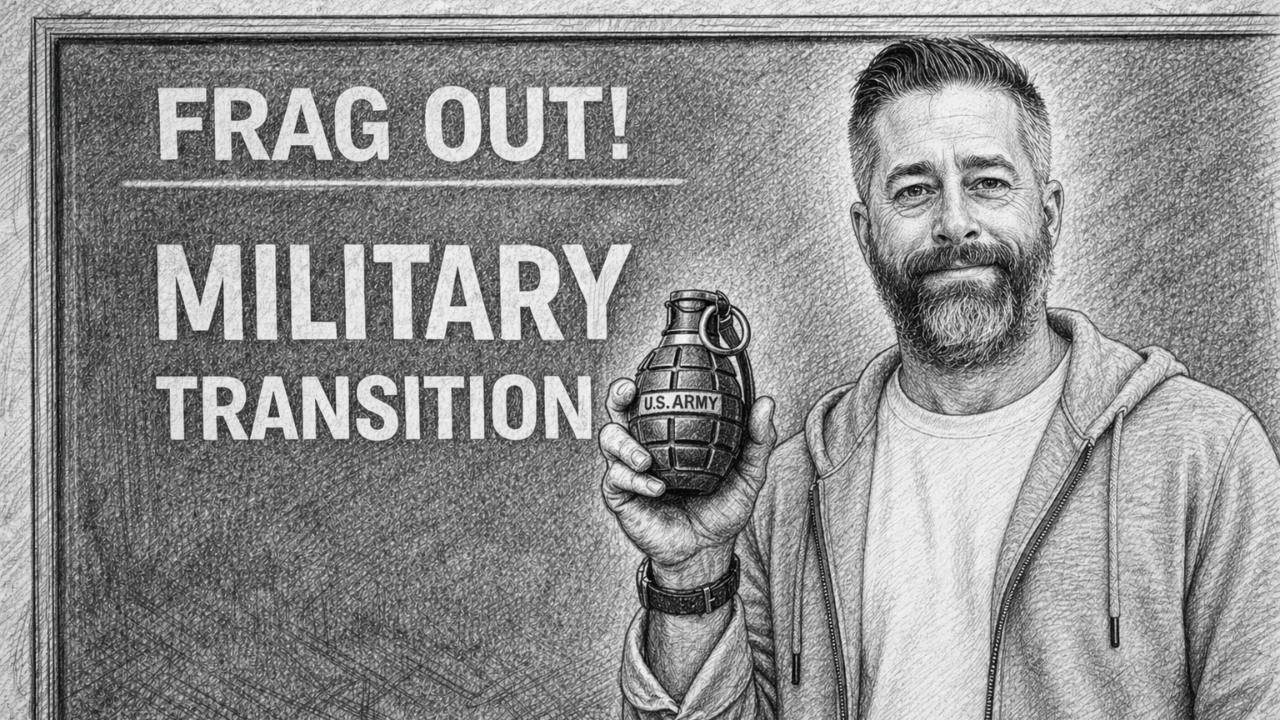
One of the fastest ways to lose a fight is to refuse to adapt to the terrain.
You wouldn’t use the same tactics in the mountains of Afghanistan that you’d use in the streets of Baghdad.
You wouldn’t approach a permissive environment the same way you’d approach a hostile one.
You wouldn’t plan a mission without considering the enemy, terrain, population, weather, resources, constraints, and dozens of other variables.
The environment matters.
And when the environment changes, your tactics have to change with it.
That’s not weakness.
That’s professionalism.
Yet when many of us leave the military, we forget that lesson.
We enter the civilian workforce—an entirely new operational environment—and continue using the same tactics we used in uniform.
Then we get frustrated when they don’t work.
New terrain requires new tactics.
That doesn’t mean abandoning who you are.
It means adapting how you operate.
The Principles Still Work
There are things the military taught you that you should never leave behind. Discipline. Accountability. Preparation. Integrity. Teamwork. Mission focus. Taking ownership. Doing what you said you were going to do. Looking out for the people around you. Maintaining standards even when nobody is watching.
Those aren’t “military things.” They’re principles. And principles travel extremely well. The mistake is assuming that because the principles still work, every tactic you used to apply those principles will work too.
They won’t.
Principles are durable. Tactics are situational. That’s an important distinction.
In the military, you may have enforced accountability one way. In a civilian organization, you may need to accomplish the same thing differently.
In the military, you may have communicated with your team one way. In your new company, that communication style may not be effective.
In the military, rank and position may have provided some level of authority. In the civilian world, you may need to build influence before anyone cares what you think.
The objective hasn’t necessarily changed. The method has.
Think about how ridiculous it would be to enter an unfamiliar operational environment and immediately begin executing without any assessment.
Where are we? Who are the key players? What’s important here? What are the threats? What resources do we have? What are the constraints? How are decisions made? What does success look like?
We would never intentionally ignore those questions. But veterans sometimes walk into civilian organizations and do exactly that. Within a few weeks, we’ve decided: “This place has no standards.” “Nobody knows how to lead.” “Communication here sucks.” “They make everything too complicated.” “In the military, we would have…”
Maybe. You might even be right. But before you start fixing the terrain, you should probably understand it. Every organization has its own culture.
Its own language. Its own personalities. Its own incentives. Its own informal leaders. Its own decision-making processes. Its own history. Its own unwritten rules.
You need to learn them. Not because you have to agree with all of them. Because you need to understand the environment you’re operating in.
One of the easiest traps after leaving the military is constantly comparing your new organization to your old one. “In my unit…” “When I was a platoon sergeant…” “At battalion…” “In Special Operations…” “We would never have done it this way…”
Your experience matters. A lot. But there’s a point where experience stops being an asset and starts becoming baggage. That’s when you stop using your experience to inform your decisions and start using it to invalidate everything that’s different.
Different doesn’t automatically mean wrong. Civilian organizations aren’t failed military units. They’re different organizations designed for different purposes, operating under different constraints.
They shouldn’t function exactly like the military. And expecting them to is setting yourself up for frustration. Your job isn’t to turn your new company into your old unit. Your job is to figure out how to create value here.
On this terrain. With this team. Under these conditions. This is where some veterans struggle. They hear “adapt” and think: “So I’m supposed to lower my standards?” Nope.
Absolutely not. Keep your standards. Change your tactics. There’s a huge difference.
You can still expect accountability without publicly smoking someone for making a mistake. You can still demand excellence without acting as if everyone works for you. You can still be direct without being unnecessarily abrasive. You can still move with urgency without treating every problem like an emergency. You can still lead without having positional authority. You can still hold people accountable while understanding that the mechanisms for doing so are different.
That’s adaptation. And ironically, refusing to adapt isn’t the tough response. It’s the easy one. The easy response is: “This is stupid.” “This would never happen in the military.” “These people don’t get it.”
The harder response is: “Okay. This environment is different. How do I accomplish the mission here?” That’s the mindset that made you effective in the military in the first place.
This can be a particularly difficult adjustment for senior veterans. For years, your rank, position, reputation, and experience carried weight. People knew what your position meant. There was an established chain of command. Roles were relatively clear. Authority was understood.
Then you walk into a civilian organization, and suddenly you’re sitting in a meeting with people who don’t know, and frankly may not care, what you used to do. That can sting. But it also creates an opportunity. Because now you have to develop another form of leadership:
Influence without authority. Can you build trust? Can you explain your ideas clearly? Can you persuade people? Can you build coalitions? Can you listen? Can you understand what motivates someone who sees the world completely differently than you do? Can you get people moving in the same direction when nobody is required to follow you?
That’s leadership too. In many ways, it’s a more difficult version of it.
Your military experience can be incredibly valuable in the civilian world. But you have to translate it. Don’t try to replicate the military environment. Translate what worked. Maybe the military taught you the importance of rehearsals. Great.
Your company probably isn’t going to conduct a full-blown mission rehearsal. But you can introduce better preparation before a major presentation, product launch, client meeting, or project milestone.
Maybe you learned the value of an after-action review. Great. Your company doesn’t need everyone standing around discussing sustains and improves. But you can create a simple lessons-learned process after major projects.
Maybe you learned disciplined planning. Great. Don’t walk into your marketing department and start teaching the Military Decision-Making Process. Take the underlying principle and make it useful in their environment.
That’s translation. And veterans who learn how to translate their experience become incredibly valuable.
When you arrive somewhere new, resist the urge to immediately demonstrate everything you know. Spend some time learning. Observe. Ask questions. Listen. Figure out who actually gets things done. Understand why processes exist before deciding they’re stupid. Learn what your boss cares about. Learn what your customers care about. Learn what your team cares about. Understand the organization’s problems before offering solutions.
In other words: Conduct reconnaissance. You don’t have to spend six months silently observing. But you should spend enough time understanding the environment that your actions are based on reality instead of assumptions. Then start making an impact.
This may be the hardest part. There are behaviors that may have served you well in one environment that simply aren’t useful anymore. Maybe being extremely aggressive worked. Maybe being emotionally guarded worked. Maybe solving every problem yourself worked. Maybe pushing through exhaustion worked. Maybe never asking for help worked. Maybe being the loudest voice in the room worked. Maybe rank allowed you to be more directive than collaborative.
That doesn’t mean those behaviors were always bad. They may have been appropriate for that environment. But the environment changed. And hanging onto a tactic simply because it once worked is a terrible reason to keep using it.
Ask yourself: Does this behavior help me accomplish the mission I’m on now? If the answer is no, change it. You aren’t betraying your past. You’re applying what your past taught you.
Adaptability was always part of the job in the military, yet we quickly forget that. Here’s the irony. Veterans should be exceptionally good at this. Think about your military career.
New duty station. New unit. New commander. New team. New mission. New country. New culture. New equipment. New threat. New operating environment.
What did you do? You figured it out. You learned. You adjusted. You adapted. And you kept moving.
So why should civilian transition be any different? The environment changed. Fine. Assess it. Learn it. Adapt to it. And get back to work.
New Terrain. New Tactics. Same Standards. You don’t need to become a completely different person to succeed after the military. You don’t need to abandon your values. You don’t need to apologize for the standards that made you successful. And you certainly don’t need to forget where you came from.
Bring the good stuff with you. Bring the discipline. Bring the accountability. Bring the resilience. Bring the preparation. Bring the ability to perform under pressure. Bring the commitment to the team. Bring the willingness to take ownership. But don’t become so attached to the way you used to operate that you become ineffective in the environment you’re in now.
Because the objective isn’t to prove that your old tactics were better. The objective is to succeed in the mission you’re on today.
Keep the principles. Protect the standards. Change the tactics.
The terrain changed. You should too.
FRAG OUT.
Stay connected with news and updates!
Join our mailing list to receive the latest news and updates from our team.
Don't worry, your information will not be shared.
We hate SPAM. We will never sell your information, for any reason.